Glass for replacement windows
Pilkington K glass and low-e windows
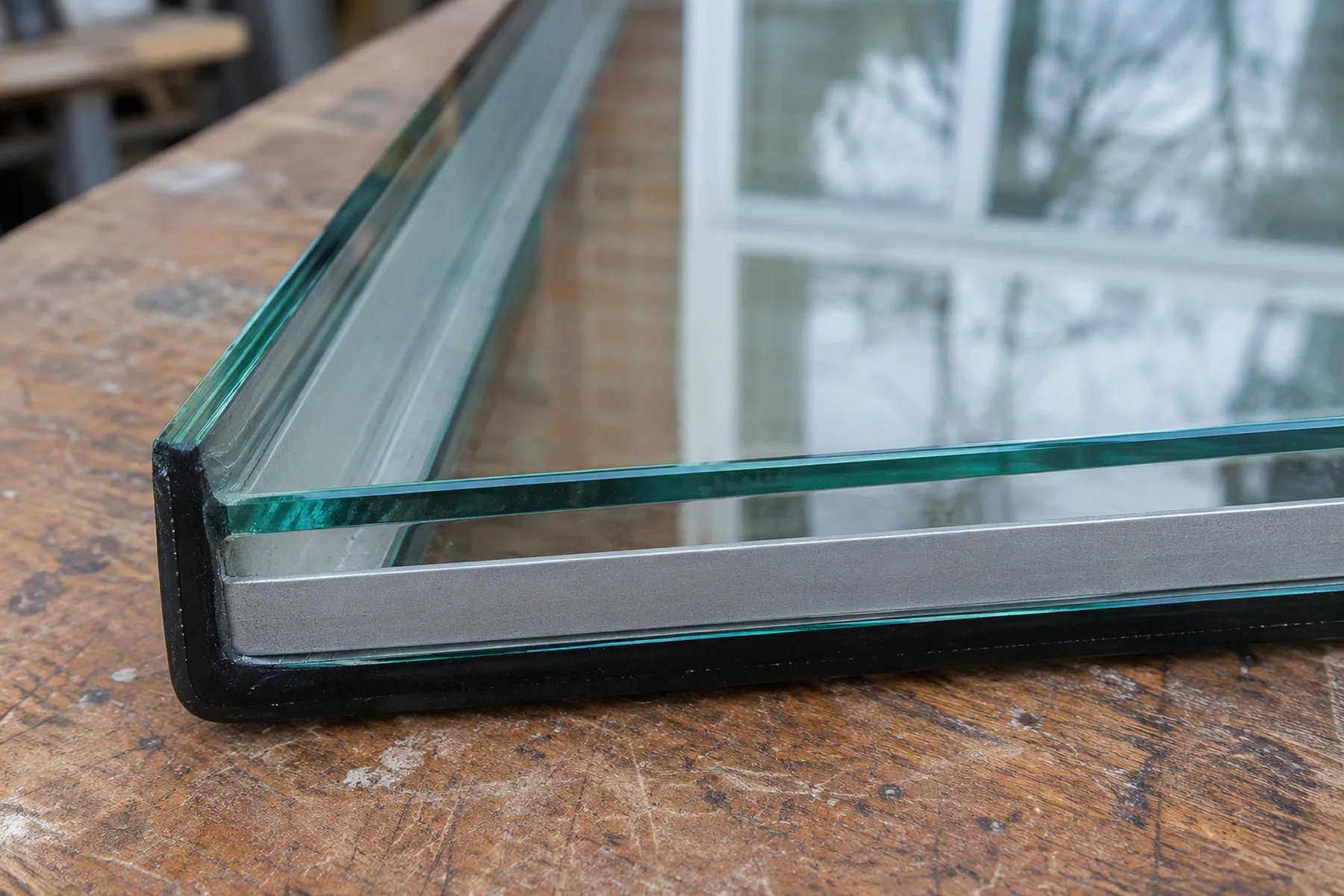
Pilkington K glass is a low-emissivity (low-e) glass with a hard coating that is applied while the glass is made. Pilkington describes it as the original on-line coated low-emissivity glass, designed to improve the thermal performance of insulating glass units. In a replacement window it is normally the inner pane of the double glazed unit, where its job is to keep heat in the room.
This page is based on Pilkington’s own product page for K Glass. Other makers sell low-e glass too, and the questions at the end apply to any of it.
What a low-e coating does
Heat in a room leaves partly as long-wave radiation, the warmth you feel from a radiator or a wall. The coating reflects a proportion of that radiation back into the building. It still lets solar energy through the glass, so the window keeps its light and some of the sun’s warmth. The effect is a warmer inner pane and less heat lost through the window.
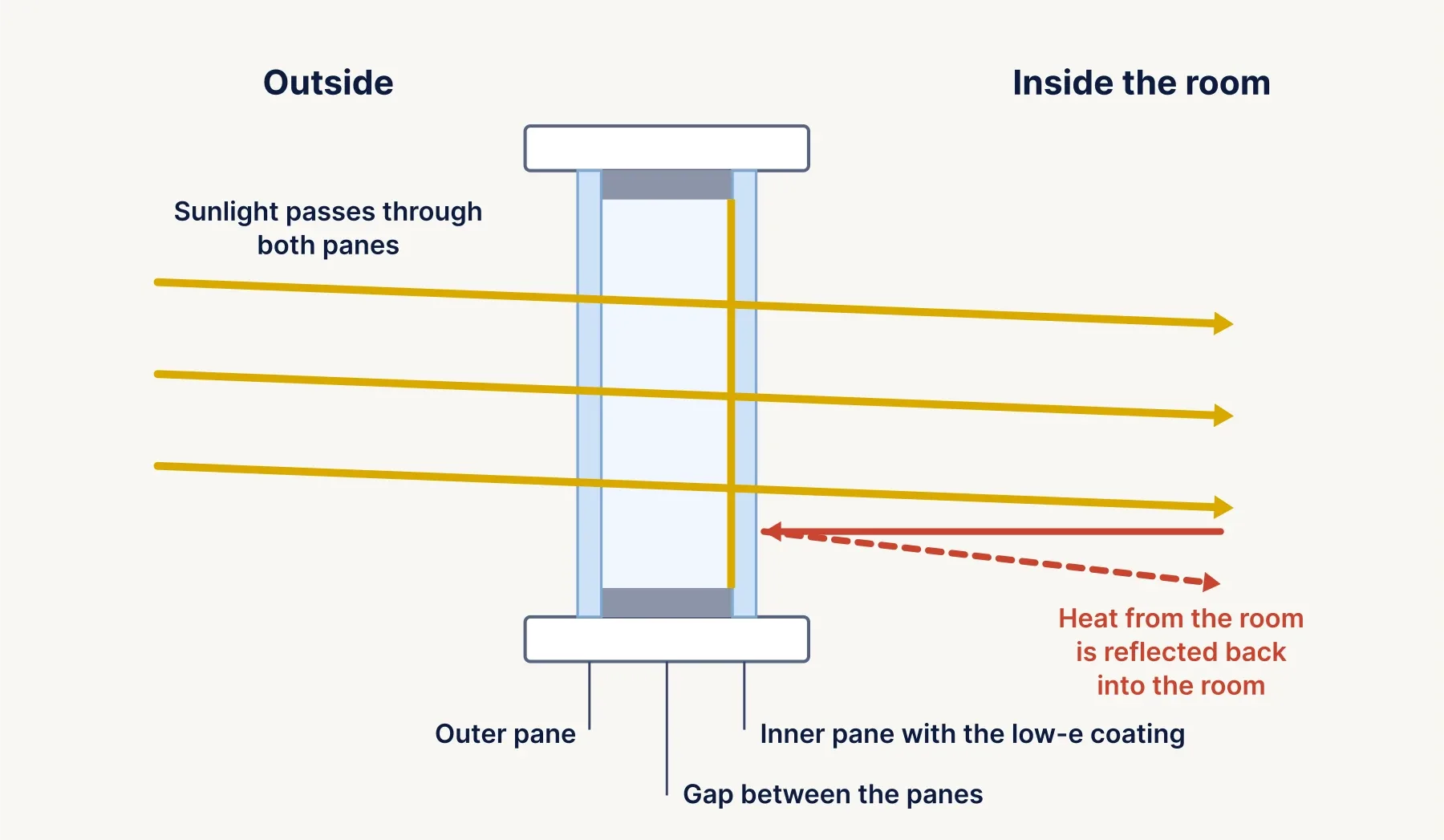
Where the coating sits in the unit
Pilkington says K Glass is typically positioned as the inner pane of a double glazed unit. Because the coating is hard, it is applied during manufacture and does not need edge deletion when the unit is made. The glass can also be cut and handled much like ordinary float glass, and it can be toughened or laminated where safety rules call for it. That is why it fits so many frames: Pilkington lists uPVC, timber and aluminium systems, as well as conservatories and refurbishment.
K glass and the energy rules
A coating on one pane is one of the ways a modern window meets the energy limit. In England the limit for a replacement window is a U-value of 1.4 W/m²K or a Window Energy Rating of band B or better, from Approved Document L. Pilkington is careful to say that K Glass can support compliance “depending on the complete window system specification”. The figure that counts is for the whole window, with its frame, spacer and seals, and not for the glass alone. The rules for replacing windows explain how that is checked.
Pilkington K glass U-value
Many people search for a single U-value for K Glass. Pilkington’s page does not publish one, because the figure depends on how the unit is built: the gap, the gas and the other pane. It points to its own calculation tool for the centre pane figure. So a number you find online for “K glass” describes one particular unit, and your window may differ.
What to ask the fitter
- Which glass is in the unit, and which pane carries the coating?
- Is the energy rating or U-value quoted for the whole window?
- If the quote says “low-e” or “energy glass”, which make is it?
- Does the unit include any safety, obscure or acoustic panes? See BS 6262 safety glass for where safety glass is needed.
A fitter who can answer all four will have the figures to hand. If the quote only says “A-rated”, ask for the rating itself in writing, then compare quotes on the same basis. The cost of replacement windows for a 3-bed semi shows where glass sits in the price.
Get quotes for your home
A guide price only takes you so far. Local firms can price the work on your own home, and comparing a few quotes is the quickest way to see what is reasonable.
Compare free quotes